
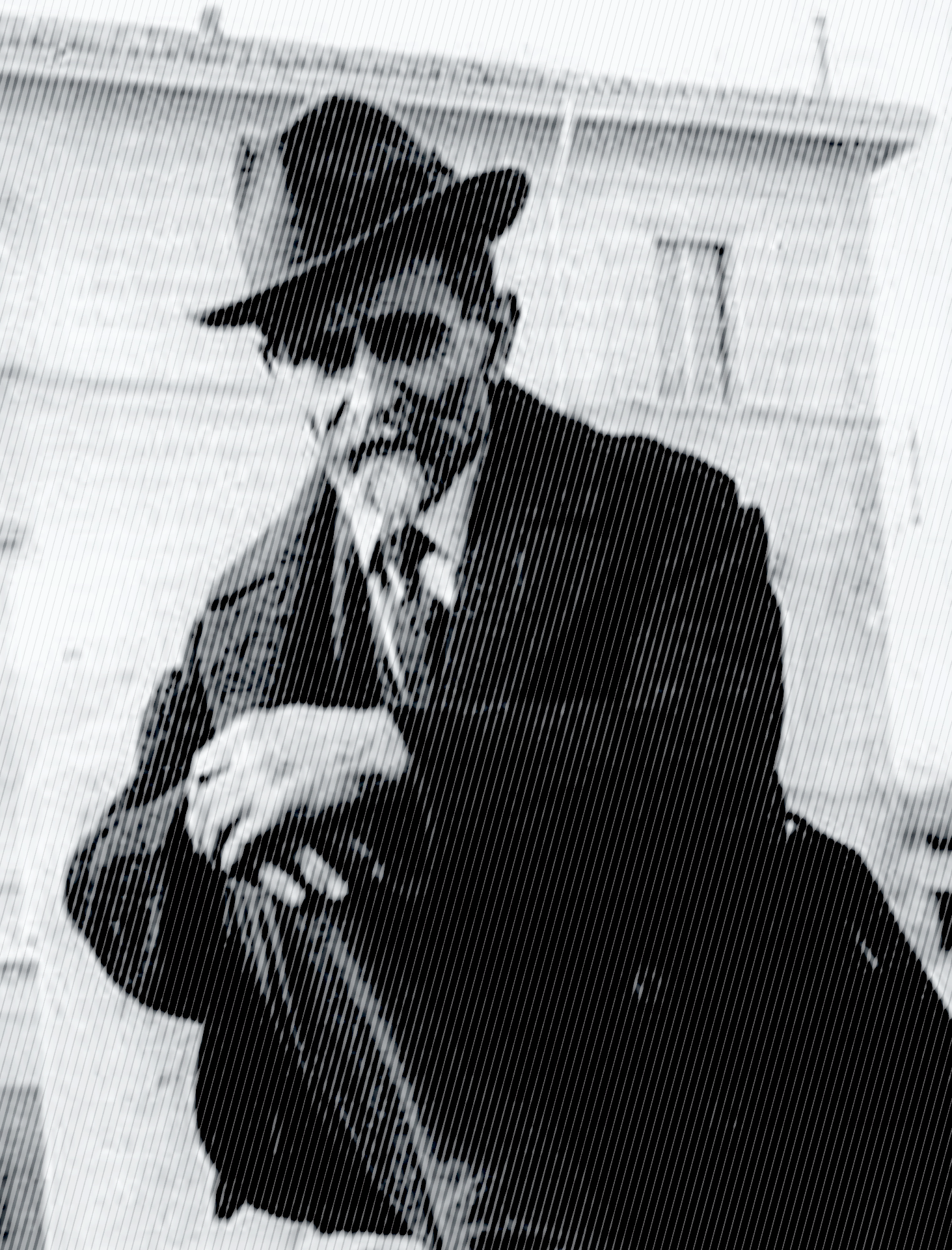
[As with every other text on this site, this article is republished strictly for the purpose of allowing an awareness of the historical record, not as any kind of endorsement or encouragement of the views expressed by its author. -Ed.]
An excerpt translated from the article entitled ‘Per la Verità’, from ‘Pensiero e Volontà’, Rome, October 1, 1926
…Ever since I managed to get to Italy at the end of 1919, escaping from the english police, who, in order to serve the italian government, were preventing me from leaving England, until October of 1920 when I was imprisoned, and then again, after my release from prison, until the last moment that it was possible to speak and move, that is, until the [fascist] march on Rome, I did nothing but urge immediate action.
I was always at odds with the socialists, because they said we shouldn’t rush things, we should let time do its work for the Revolution, and I instead believed and said that it was necessary to act quickly because time was making our work increasingly difficult and would end up making it impossible for a long time to come.
On the one hand, I said, the masses cannot remain in their current state of tension for long, and if nothing decisive happens, they will soon become tired and discouraged. On the other hand, the bourgeoisie will recover its balance and courage, while the government prepares its forces of repression. In fact, Nitti was already reinforcing the royal Carabinieri [paramilitary police] and creating the royal guard.
I tried to attract the socialist masses to us and put them on guard against their managers, who had promised revolution in order to get elected as deputies, but once elected did everything they could to prevent the revolution from happening. A typical case, which I made a scandal of, was that of the deputy from Mantova, Dugoni, who, during the mantovan insurrection, colluded with the prefect [chief magistrate] to undermine the movement and designated the most precarious and dangerous subversives for persecution.
When the factory occupations were taking place, I never ceased preaching the need to spread the movement and raced from one plant to another to urge resistance. I told the workers: “If you abandon the factories, of which today you are the masters, you’ll return later like slaves, like disheartened dogs with your tails between your legs, and you will fall back into the state of misery and abjection which you have managed to overcome.”
The keynote in all my speeches was this: “Act immediately or the bourgeoisie will make you pay with tears of blood for the fear you’ve caused.”
At the last meeting that it was possible to hold in Rome — when fascism was on the verge of triumph — in front of a crowd of some 50,000 people, Enrico Ferri, speaking for the Socialists, in the name of “inevitable evolution”, of the “laws of history”, etc., urged them to remain calm and trusting, to wait until the time is ripe, whereas I said: Act, resist, oppose violence to violence, or tomorrow… it will be too late…
Errico Malatesta
Also
For Candia, by Errico Malatesta (1897)
“The Armed Nation”, by Errico Malatesta (1902)
The War and the Anarchists, by Errico Malatesta (1912)
Our Foreign Policy, by Errico Malatesta (1914)
While the Carnage Lasts, by Errico Malatesta (1915)
Italy Also!, by Errico Malatesta (1915)
The Preventive Counter-Revolution: Essay by an Anarchist on Fascism, by Luigi Fabbri (1922)
Mussolini in Power, by Errico Malatesta (1922)
Why Fascism Won, by Errico Malatesta (1923)
Fascism, by Bartolomeo Vanzetti (1923)
Communists and Fascists, by Errico Malatesta (1924)
Libyan genocide (1929–1934), from Wikipedia
Mussolini: The Great Actor, by Camillo Berneri (1934)
Mussolini’s War Upon East Africa, by Marcus Graham (1935)
Anti-Fascism: Capitalist or Socialist?, by Vernon Richards (1938)
Reaction in Canada, by Walter Brooks (1939)
Italy After 1918, by Marie Louise Berneri (1943)
Mussolini’s Colonial Inspiration, by Matthew Wills (2022)
Anarchism and Revolutionary Defeatism, by K. C. Sinclair (2025)
Malatesta texts at the Anarchist Library
What is Fascism? What is Democratic Colonialism?
“Why is it impossible [for Italy to leave Libya], when the voyage from Libya back to Italy takes only a few hours?’
Errico Malatesta, Via dall’Africa!, Volontà, Ancona (1914)
