
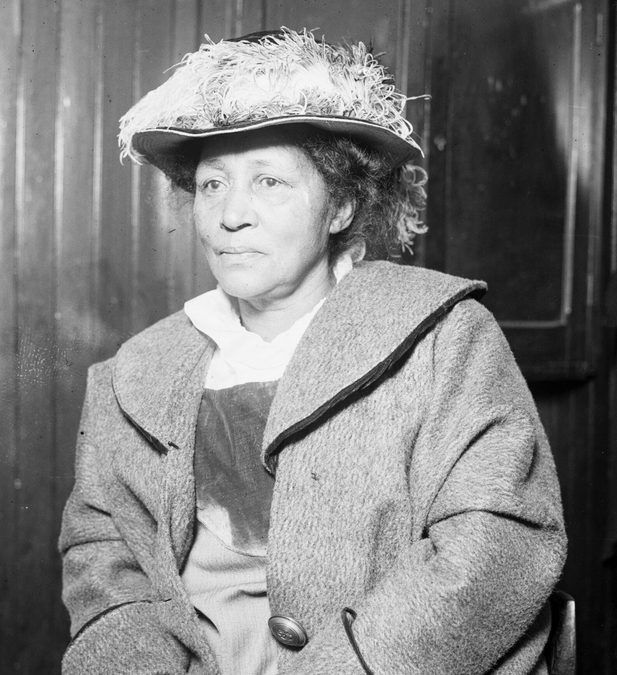
From ‘The Demonstrator’, October 2, 1907, Home, Washington
We who have stood in the van of the economic struggle, watched its surging waves, its tidetime and its recession, its ebb and flow, its partial successes and its dismal failures, find but little encouragement and very small gain for so much energy expended; yet, tired and weary, tho we may be, we can not, we must not stop!
The enemies of human liberty were never more powerful, heartless, and determined to throttle what little remaining freedom the common people possess than at the present time.
Consolidated capital, with its numberless means of oppression, among which are the Pinkerton spy, the blacklist and the strikebreaker, is ever engaged in a ceaseless, sleepless, tireless, relentless warfare upon the wealthproducer everywhere. The capitalistic class use their weapons without mercy against those who dare dispute their “right” to hold as private property this fair earth and its beautiful resources.
Yet, the eternal truth of all the ages must be answered. By what right have the few to possess the heritage of the many? Is it by the right of force? Then there is being forged in the heart and brain of every revolutionist a greater force, and science can, and will, show the workers how to use this force to his advantage. Have not the rulers always, at all times and everywhere, used the most improved methods to rob the people and oppress them, and keep them in subjection?
Will the people ever be able to vote themselves the land and machinery? Never! Will they ever be able to take it? Yes. Just as soon as they make up their minds that it is theirs, theirs by the law of justice, then, determined to repossess themselves of this fair world and its resources, they will get it, and not until then.
The question of this age, the question upon which the future happiness and wellbeing of humanity depends, is, preeminently, the economic question. With this problem solved the highway is opened up to all forms of progress and all may travel thereon who will.
And what is the “economic question”, briefly stated? It is the fact of man’s dependence on matter for his earthly existence. This dependence is his natural and inevitable condition — a condition fixed in the framework of the universe; he has a natural and inalienable right to that dependency. It is a right implied and given in his life itself; to deprive him of his share in this birthright is to make a slave of him.
It is because he has been deprived of this right that a social revolution is bound to come and the sooner it comes, the better for the human race.
LUCY E. PARSONS
Also
The Haymarket Tragedy, by Paul Avrich (1984)
The Haymarket Martyrs, by Lucy E. Parsons (1926)
The Workers and War, by Lucy E. Parsons (1912)
The Trial a Farce, by Lucy E. Parsons (1911)
A Rebel May Day, from Industrial Worker (1909)
Patriotism, by Lucy E. Parsons (1906)
Lucy E. Parsons’ Speeches at the Founding Convention of the Industrial Workers of the World (1905)
The War Spirit, by Lizzie M. Holmes (1898)
A Piece of History, by Lucy E. Parsons (1895)
Reconstruction in Texas, by Albert Parsons (1889)
Autobiographies of the Haymarket Martyrs (1886-1889)
Before the Storm, by Peter Kropotkin (1888)
Publisher’s Note, by Lucy E. Parsons (1887)
Arrest of Mrs. Parsons and Children, by Lizzie M. Holmes (1887)
Law vs Liberty, by Albert Parsons (1887)
The Philosophy of Anarchism, by Albert Parsons (1887)
The Famous Speeches of the Eight Chicago Anarchists in Court (1886)
Abolition of Government, by Lizzie M. Swank (1886)
“Timid” Capital, by Lizzie M. Swank (1886)
Plea for Anarchy, by Albert Parsons (1886)
A Martyr, from The Alarm (1885)
A Free Society, by Albert Parsons (1884)
The Indians, from The Alarm (1884)
To the Workingmen of America, by the International Working Peoples’ Association (1883)
Lucy E. Parsons texts at the Anarchist Library
Anarchism & Indigenous Peoples
Anarchists on National Liberation
