
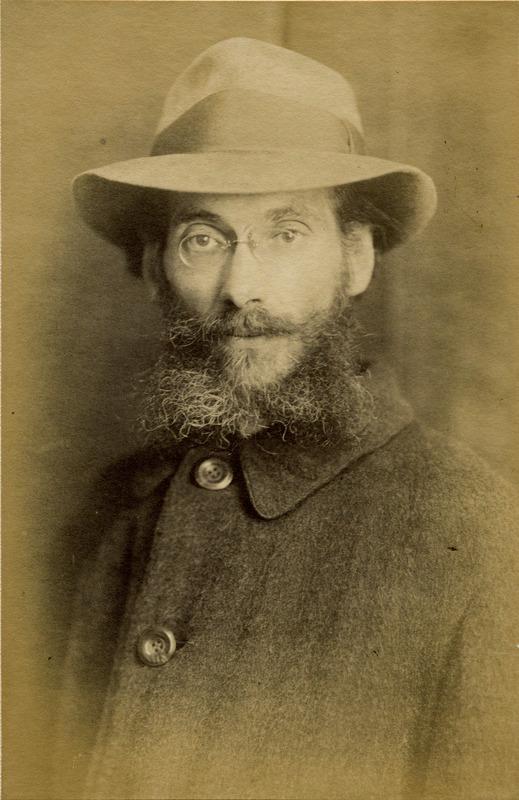
From ‘Der Sozialist’, February 15, 1912, translated by Gabriel Kuhn
Comrades, when you oppose war, there is one thing that you must never forget: you are right in what you do; you are right in feeling anger and disgust; you are right in opposing not only all aggressive expansionist politics but also all standing armies during so-called peaceful times; armies that turn as much against internal enemies and their own people as against external enemies and foreign people. Look at a globe to comprehend the space that the earth’s peoples occupy; look at history to comprehend how our own times rest on the becoming of other times.
During the greatest of their revolutions, the French people united and formed a new, self-conscious nation. It was not enough for the “patriots” who achieved this to fight against their country’s monarchy and feudal aristocracy; they soon had to defend their freedom and their revolution against the powers of the coalition: Prussia, Austria, Spain, Sardinia and Piedmont, etc.
There were also elements of aggression and expansionism within the revolution; indeed, under Napoleon the newly born French nation soon attacked Spain, Germany, and other countries, stirring the spirit of revolutionary nationalism. In the beginning, however, the violence and military organization of the revolutionary French nation was used to defend it against the foreign royal armies that had been solicited by the king and the aristocrats.
What would have become of the French Revolution and the French nation had it not been for the inspired action and the organizational genius of Danton and of the Committee of Public Safety, especially Carnot? What would have occurred without the young generals of the revolution who arose from the midst of the people, and without the belligerent revolutionary fire of the masses that found such striking expression in the Marseillaise? At that time, no antimilitarist could have been a revolutionary or a patriot. The revolutionary nationalists had to act in self-defense.
Let us take a look at the world today. What is the danger for the revolution in Mexico, in Persia, or in the enormous land of China? What gets in the way of the Turkish movement? It is mainly the threat of external enemies.
The revolution in Mexico is in full force. We know that Madero has only been able to oust Díaz because he had promised land to the proletarians and the Indians. All of the numerous revolutionary leaders emerging today — Reyes, Gomez, Zapata, Salgado, and all the others — only find followers because they instigate agrarian reforms. We must not believe, however, that the people can always be betrayed. While the revolutionary leaders use them to solidify their power, the people use the leaders’ power for their own interests. The people also make use of the revolutionary disorder. Indians and serfs, for example, settle the land they want to occupy — which is usually the land that used to be theirs.
All this might be achieved, and the revolutionaries might win and prompt significant changes to establish a new social order — if it was not for the United States of North America, which are only concerned with their own political agenda and the interests of their billionaires. At the right moment, they will intervene and send their troops. What happens then? Hopefully, an enormous revolutionary nationalist fervor will unite all of the Mexican people and there will be what we have to call war.
The situation in Persia is evident: the Russians and the English shamelessly follow agendas of power, while the Persians want to establish fairness and freedom.
The consequences of the Turkish Revolution — a revolution that succeeded mainly thanks to the country’s military — were inevitable given the situation in Europe: the Turks are forced to build up their army due to the hostility of their foreign enemies.
The situation in China is evident too: the young Chinese republic is surrounded by enemies who are not only waiting for its collapse, but who are trying to provoke it by all kinds of dirty tricks. Their intention is to rob, plunder, and exploit. The threat is imminent. No one will be helped by abstract announcements that demand an end to all domination, including that of the Chinese republic. Neither will anyone be helped by declarations that oppression at the hands of the Chinese or the Manchu is as bad as oppression at the hands of foreigners.
There are always levels of oppression, and they always matter for the oppressed. Perpetually reiterating that one thing is “just like the other” is akin to playing dodgeball with words. It has nothing to do with reality and it lacks empathy. There is no “just like the other.” The domination of English, Russians, French, or Germans over China is something entirely different from a Chinese republic created by revolution. The foreign powers do not even treat the Chinese like human beings — they treat them like things.
The danger that comes from the outside has great significance for China’s development. The Chinese have a natural tendency for federalism, not least because of their diverse tribes. Who could be happier about a federative republic than we socialists and anarchists? However, if China remains China and is not torn apart by foreign bloodhounds, then centralism — both of the government and of the military — will most probably win. This is a harsh realization. But things go the way they have to go, and the defense of the Chinese Revolution will require the militarization of the country’s numerous peaceful tribes. Whether the consequence of this will be expansionist aggression under a Chinese Napoleon or a new Timur, we — or our children — will find out in the future.
We have to realize and admit that the war between states — or, in general, state politics — do not only produce conflicts that concern the states. State politics also produce revolutions, and these revolutions might in turn produce wars as a need of defense against foreign aggression.
It is of course right to rally behind slogans such as: “We have to get rid of the state!” or “We have to create a different social order!” However, this does not change the fact that states do exist and that we have to deal with them. Neither does it change the fact — and let me emphasize this, as it is very important, but all too often overlooked — that it is not only states that go to war, but also young nations united and created by revolution; nations that are forced to defend themselves against the aggressor states.
What can we do in Germany, France, Austria-Hungary, Italy, Russia, England, or America? What can we do while we are active in these countries trying to create new forms of socialism from below? We have to do whatever it takes to prevent belligerent, aggressive, and exploitative activities of our governments directed against the rising (becoming) revolutionary peoples. We have to do this both for our humanity and for humankind. No people can guarantee freedom and a just order when there is no solidarity among all peoples in the struggle against war and the state. As long as this struggle is not won, war will remain a reality — not only between the states, but also as a means of defense of revolutionary nations.
What has been laid out here should prove enlightening for those who think it through. They will come to an essential realization; a realization for which there are plenty more examples than the ones provided here. Yes, the emergence and action of an individual, a group, a people, or the masses can be sudden, immense, fierce, and powerful. However, the outcome will be but a tiny step forward. During all our work — no matter where it takes us and how long it lasts — it is mandatory for us to remember this.
This is bitter medicine, I know. However, there is also consolation. Dear friends, whatever you do, it is not so much the external result that counts, it is what you can give to yourself! You follow your own nature and you have to do whatever leaves you at peace with what is inside of you. Who will be most effective in the struggle for external social transformation? It will be those whose actions are righteous and courageous and who are able to look at themselves with pride, satisfaction, and strength. Whoever is whole and reliable in the present will be whole and reliable in the future. The generations to come will be grateful if we do not live for them but for our own souls. This is the greatest gift we can give them.
Also
War is Declared!, by Joseph Déjacque (1859)
Gustav Landauer, 1870-1919, from Wikipedia
War and the State, by Mikhail Bakunin and James Guillaume (1870)
Letters to a Frenchman on the Present Crisis, by Mikhail Bakunin (1870)
The Conscripts Strike, by Louise Michel (1881)
The Anarchists and the Eastern Question, by Errico Malatesta (1897)
To the Cuban People, by Errico Malatesta (1900)
Against Militarism, by Errico Malatesta (1902)
Military Service, by Errico Malatesta (1902)
People and Country: Thirty Socialist Theses, by Gustav Landauer (1907)
The Great French Revolution: 1789–1793, by Peter Kropotin (1909)
The Probable Intervention, by Praxedis G. Guerrero (1910)
The True Crisis, by Ricardo Flores Magón (1911)
Report of the Mexican Liberal Defense Conference of Chicago, by Voltairine de Cleyre (1911)
A Correction [about Mexico], by Peter Kropotkin (1912)
The War and the Anarchists, by Errico Malatesta (1912)
Concerning the Beginning of the End, from Tiempos Nuevos (1912)
Are These the Words of a Heretic?, by Gustav Landauer (1913)
Our Foreign Policy, by Errico Malatesta (1914)
Correspondence on Kropotkin’s Letter to Professor Steffen, by Fred W. Dunn (1914)
The Barricade and the Trench, by Ricardo Flores Magón (1915)
Concerning Atrocities, by James Peter Warbasse (1915)
War and the Worker, by W. S. Van Valkenburgh (1915)
Armed / The Conscious Workers, by Juanita Arteaga (1916)
Patriotism, by Ricardo Flores Magón (1917)
The Arming of Nations, from La Antorcha (1923)
The Durruti Column Responds to the Militarization Decree, by Buenaventura Durruti (1936)
Nationalism and Culture, by Rudolf Rocker (1937)
Capitalist Peace, by Ethel Mannin (1938)
Chiang Kai-Shek and the Communists in China, by Marie Louise Berneri (1942)
New Phase in Oil Struggles [about the US/UK-backed coup in Iran], by Freedom (1953)
Anarchism and the National Liberation Struggle, by Alfredo M. Bonanno and Jean Weir (1976)
Some very common theoretical errors [on national liberation], by Alfredo M. Bonanno (1982)
Mikhail Bakunin and the National Question, by Serge Sipko (1990)
Anarchism and Revolutionary Defeatism, by K. C. Sinclair (2025)
The Downward Spiral of Militarism, by K. C. Sinclair (2025)
Anarchism, May Day and Colonialism, by K. C. Sinclair (2026)
Fascism, Militarism and Anarchism: A Tale of Three Ukrainians, by K. C. Sinclair (2026)
Anarchists on National Liberation
