
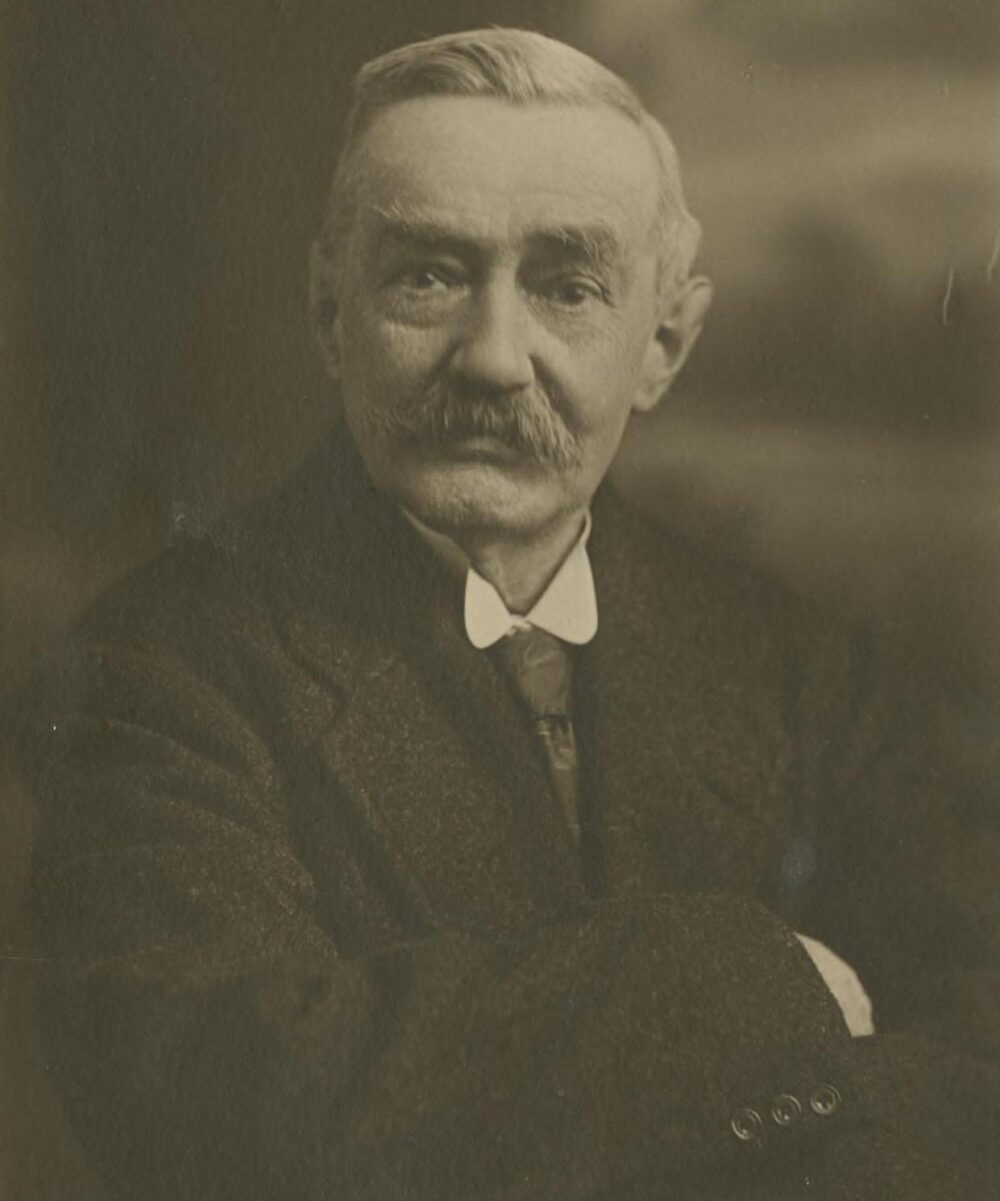
From ‘Regeneración’, English Section, April 20, 1912, Los Angeles
“Il Contro-Pelo,” of Barre, Vt., criticises caustically the attitude toward the Mexican Revolution assumed by [Luigi] Galleani in his “Cronaca Sovversiva”, and reproduces a letter written by [Peter] Kropotkin to that paper in November, 1909, relative to the revolutionary movement in Spain.
Kropotkin urged all revolutionists to help, explaining and illustrating by historical examples, that “all revolutions begin timidly, with some fact of minor importance, but their aims rise in proportion as they are prolonged. If this revolution lasts two, three or four years, and if the revolutionists have sufficient intelligence to prevent the formation of a strong government, it will reach its climax in communism.”
Citing Russia he added that there “the Social Democrats had put sticks in the wheels of all the radical elements, instead of aiding them to overthrow the autocracy.”
It is significant that Galleani in publishing that letter endorsed it most cordially, saying that the revolution would succeed and “acquire character in proportion to the boldness, the tenacity and the conscientious vigor with which the Anarchists took part in it.”
We do not like dragging into print the [John] Murrays, Galleanis, Jean Graves, etc.; for in so large a matter as the social revolution personalities should cut no figure. But it is necessary to take up the different schools that have obtained a following on the supposition that they are revolutionary, and ask how it is that when put to the test, as in the case of Mexico, they have fallen down.
When any considerable section of our fellow-workers anywhere strikes for economic freedom all revolutionists, whether they call themselves Socialists, Anarchists or Single Taxers, are bound to applaud the stroke, and, if possible, assist it. For, all the three schools named have this in common — they believe that the root of slavery is economic.
The Single Taxers and the Anarchists attach more importance than do the Socialists to overthrow of land monopoly, but the last named do not venture to deny that land monopoly is an enormous factor in the enslavement of mankind.
That an immense effort is being made in Mexico for the overthrow of land monopoly is now beyond dispute, and the failure to support that effort is as astounding to us as indifference by Wendell Phillips to an attack on chattel slavery would have been to [William Lloyd] Garrison.
Apparently the United States is now about to intervene, and on the righteousness or iniquity of that intervention it will be impossible to be non-committal.
Excerpt on Luigi Galleani’s anti-Indigenous/anti-Mexican position, from “The Whole World is Our Country”, Immigrants Against the State, by Kenyon Zimmer (2015)
Furthermore, according to Galleani, an anarchist revolution was not even possible in Mexico, given its demographics. “If for a population that reaches in all probability fourteen million, seven million are pure Indians, four [million] mestizos, two [million] Creoles, half a million Negroes, Zambos [people of mixed African and Native American descent], [and] mulattoes,” he argued, “it is clear that for Mexico there is no possibility of a movement with an openly social, revolutionary character, if the most lively, most numerous and most diligent of the population are not interested.” In this startlingly Marxian and racist formulation, Galleani claimed that an anarchist revolution could be carried out only by an industrial proletariat, not these preindustrial and therefore “uninterested” racial groups. Another critic agreed that indigenous Mexicans “completely ignore the modern world and can not be the pioneers of a social revolution.”
Debate on the Mexican Revolution (featuring anti-Indigenous/anti-Mestizo racism)
U.S. Socialists and the Mexican Revolution, by Dan La Botz (2010)
Anarchists Who Are All Talk?, by Estela Arteaga / No More Charades!, by Lucia Norman (1916)
Will this Struggle be Drowned in Blood?, by Voltairine de Cleyre (1911)
Murderous Silence: Luigi Galleani and Cronaca Sovversiva, from Regeneración Sezione Italiana (1911)
Open Letter to Eugene V. Debs, by Lucille Norman (1911)
Also
A Fragment Of Luigi Galleani’s Life, by Raffaele Schiavina / Melchior Seele (1933)
William C. Owen (1854-1929), from Wikipedia
The Land, by Enrique Flores Magón (1917)
The Death of the Bourgeois System, by Ricardo Flores Magón (1915)
The Social Revolution in Sonora, by Ricardo Flores Magón (1914)
The Mexican Comrades at McNeils, from Why? (1913)
The Traitors!, by Ricardo Flores Magón (1912)
Report of the Work of the Chicago Mexican Liberal Defense League, by Voltairine de Cleyre (1912)
Chicago Workers Show Sympathy, by Voltairine de Cleyre (1911)
People of America, by Ricardo Flores Magón (1911)
To the American People, by Ricardo Flores Magón (1911)
The True Crisis, by Ricardo Flores Magón (1911)
The Mexican People are Suited to Communism, by Ricardo Flores Magón (1911)
William Stanley, from Regeneración (1911)
The Mexican Revolution, by Voltairine de Cleyre (1911)
To Arms Ye Braves! An Appeal from the I.W.W. Brigade in Mexico, from Industrial Worker (1911)
Reds Die For Freedom, by the Industrial Workers of the World (1911)
War for Who? Your Boss, from Industrial Worker (1911)
Report of the Mexican Liberal Defense Conference of Chicago, by Voltairine de Cleyre (1911)
Capitalism in Mexico, by Honoré J. Jaxon (1911)
The Probable Intervention, by Praxedis G. Guerrero (1910)
The Tragic Week in Catalonia, from Freedom (1909)
The 1905 Revolution in Russia, by Peter Kropotkin (1905)
Voting, Government, Slavery and War, by William Lloyd Garrison (1856)
The Indians, from The Liberator (1838)
William C. Owen texts at the Anarchist Library
Anarchists on National Liberation
